
Canals
Slow transport, for when you aren’t in a hurry

It was early. The birds in the trees had hardly started singing and the sky was still that particular shade of grey. Not dark, exactly, but devoid of light, with just a hint of something, over in the east, to suggest that night would soon be over.
Josiah the lockkeeper’s ears twitched – he’d been up for half an hour already, and had got the fire going in the stove, heating the kitchen and slowly boiling the kettle sitting on top. He listened carefully. Outside, in the distance, he could hear it. A regular clop, clop, clop, echoing gracefully along the deep cut as a horse, definitely a shire horse in this case, ambled slowly, with a measured pace, along the towpath, pulling a narrowboat behind it.
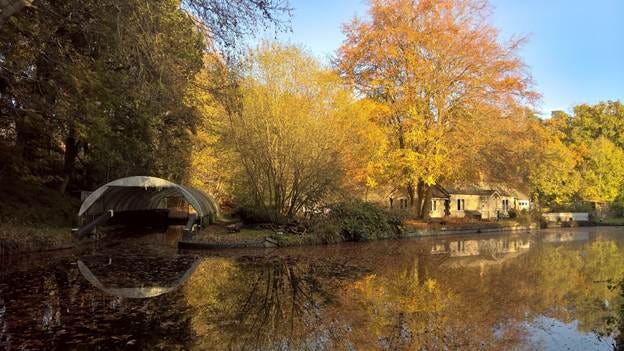
It would be another half hour before the boat reached his cottage and was tied up, so Josiah poked the fire to make it a bit more lively, and then went outside. He crossed the bridge over the lock and headed towards the bend in the canal. Once there, he could look right along the cut to the far end where, just beyond the next bridge, he could see the horse and, behind it, the boat. Even from that distance he could see, or at least thought he could see, the steam rising gently from the horse as it plodded along, he knew from experience that the canal was a bit shallower by that bridge, and the horse needed to work a bit harder to make sure that the boat didn’t end up grounded.
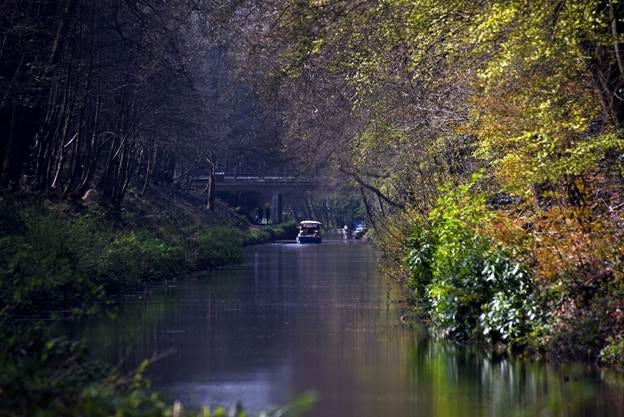
He watched for a bit, and then headed back to his cottage, spotting a red kite floating overhead as he did so. His wife had come back from the chicken coop with eggs which she had scrambled and was already dishing up, so he tucked in, all the while listening to the clop, clop, clop.
Clop, clop, clop.
Thirty minutes later, Josiah went back outside. The boat was now close to the house, and so he waved at the two men, one standing at the back of the boat, and the other on the towpath with the horse. Between the three of them, it only took a moment to tie the boat up and then lead the horse, Ricky, to the other side of the house, where it would get a well-deserved meal while the men had an equally well-deserved cup of tea, and a slice of toast and jam too.
The three of them sat down on a bench, mugs in one hand, food in the other. They didn’t say much. They didn’t need to really, this was their way of life. The canal had only been built fifty years before, but it felt as if it had always been there, and what they were doing today would continue forever.
The boat was carrying wood from Basingstoke. The boat would eventually reach the canal’s junction with the Wey and then head downstream towards Coxes Lock, where the timber would be unloaded and then either sent to Coxes Mill, or along the Thames towards London. There was talk that the mill might soon start milling flour instead of wood, but none of the men, sipping their tea, thought anything would come of it.
Once the mugs had been drained, Ricky was led back to the towpath and hitched back to the boat, which he then pulled through the open lock gates into the lock. The upper gates were closed, and then the paddles opened on the lower gates, allowing the boat to go down, gently, to the downstream level.
Once the levels were balanced, Ricky pulled again, and the boat moved out of the lock and headed towards the next bend. Josiah waved at the travellers and then turned away, heading back towards his cottage. He realised, a moment later, that he couldn’t hear anything and, when he looked back, Ricky and the men had disappeared. The boat was still there, but it seemed to be transparent and, as he watched, it drifted towards the bend where, it stopped, settled into the water, and faded away.
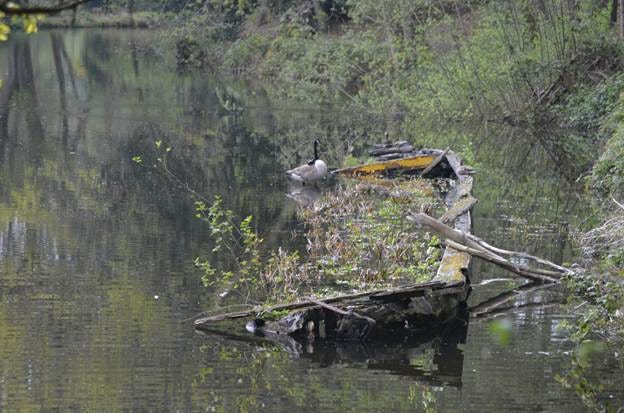
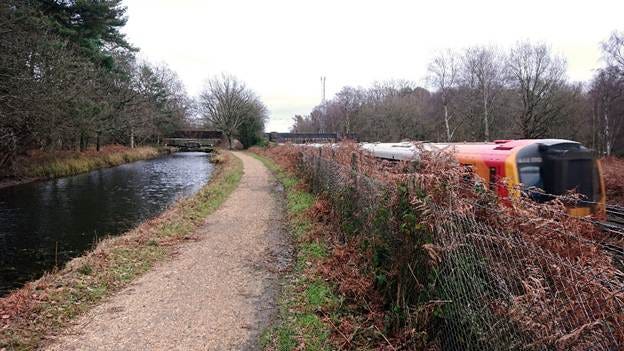
Josiah, didn’t know what he had just seen, so he ran along the towpath towards the bend. When he got there, he could see the remains of the boat, but there was nothing left above the waterline and it looked like it had been there for ages. Behind him, there was another noise and, moving at a speed he could only imagine, a long metal machine shot past. Josiah blinked and, before he could even begin to process what he had just seen, there was another noise overhead, and a large seemingly metal bird passed over him, heading towards Frimley and Farnborough Common.
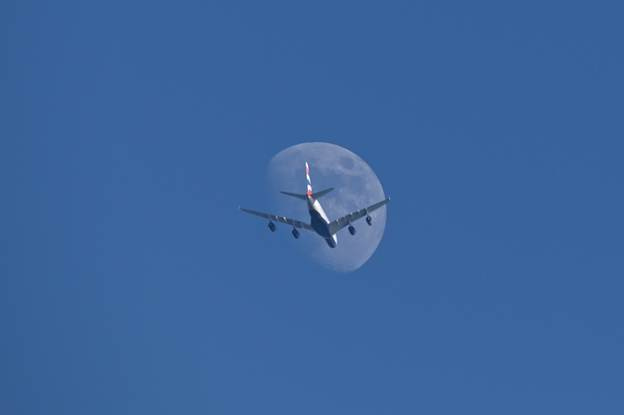
In a panic, Josiah ran back to his cottage, but when he got there, it was boarded up. The door was locked and there was no smoke rising from the chimney. His vegetable patch was overgrown and there was no sign of his family.
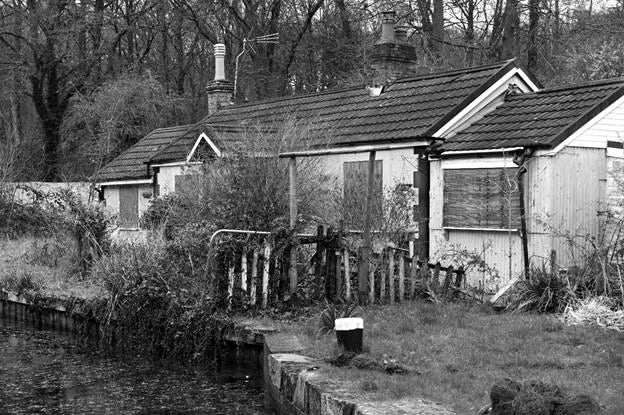
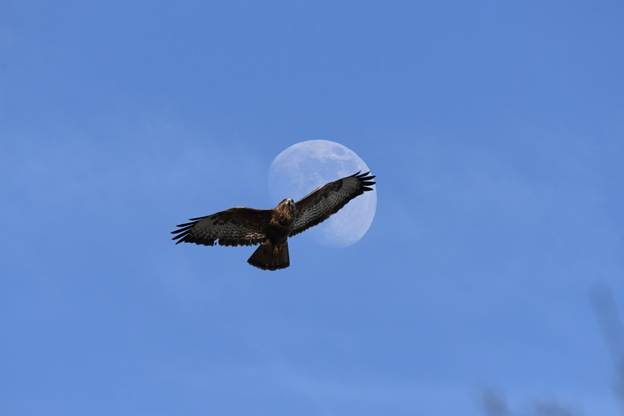
Josiah sat on a bench near the lock and realised that he too was fading away. Before he disappeared, he looked up and saw something he recognised. Overhead was a red kite, perhaps the same one he’d seen earlier, floating effortlessly in front of the moon. He smiled as he disappeared forever. They might have been wrong about almost everything, the canal had changed, and strange devices were moving at unfathomable speeds, but at least there were still birds, and the moon didn’t seem to have changed. Maybe nobody lived there after all.
And the canal, it had gone through difficult times, with the arrival of the railway, then dereliction, but it was still there, and Josiah would have been pleased to know that it was now considered to be a site of special scientific interest, a natural haven in a world he would never have understood.
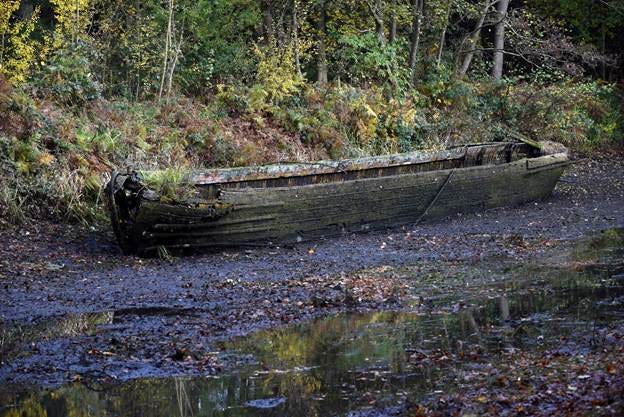
If you’d like to know more about the Basingstoke Canal, the Basingstoke Canal Society website is a good place to start. If you’d like to know more about the derelict boat at Deepcut, which apparently would have been a home at one point, probably further downstream (it seems that the blue paint is a clue), there’s a fascinating little British Pathé video here.
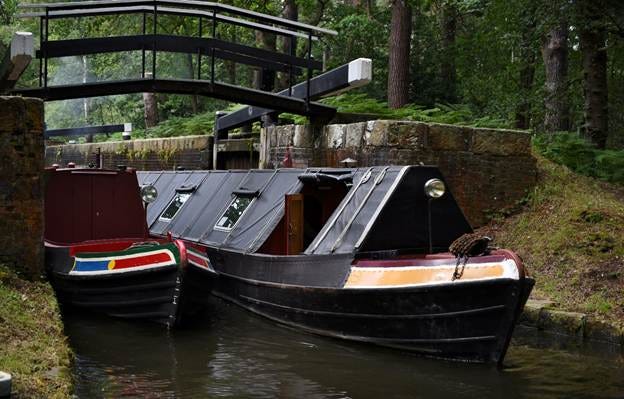
And finally, just a little reminder that these canals only exist because somebody, at some point, decided it was worth building them to move goods from one place to another. They may no longer be used for their original purpose (although what’s to say that they might not be used that way again, I’m sure they’re a low-carbon way of moving heavy goods that aren’t urgently needed). All the photos used in this post were taken within a few hundred yards of the lockkeeper’s cottage in Deepcut. I wonder what will happen to it…
If, quite understandably, the thought of subscribing is too much to contemplate, but you’ve enjoyed reading something I’ve written, then you also have the option to simply help me buy a narrowboat (contributions may in fact just be used to buy a cup of tea from the little café moored in the middle of Woking, but I won’t tell if you don’t ask).