
A house
On a hill

A long, long, long way north of where I’m writing this, there’s a house.
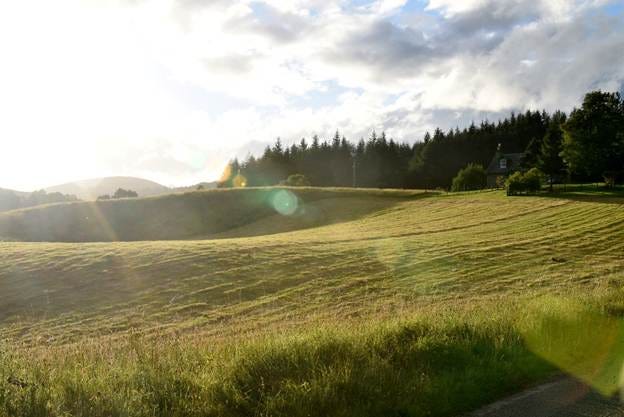
About 600 miles away. At this time of year, if you set off from this neck of the woods towards the end of the afternoon and point your car vaguely towards the setting sun, the closer you get, the less dark the skies will appear to be before, not long after setting, the sun reappears and illuminates the rest of your journey.
Heading there by car in winter is a different kettle of fish. It’s likely to be dark, and cold, and probably raining for most of the journey, but that doesn’t matter because once you arrive, the house will be happy to see you.
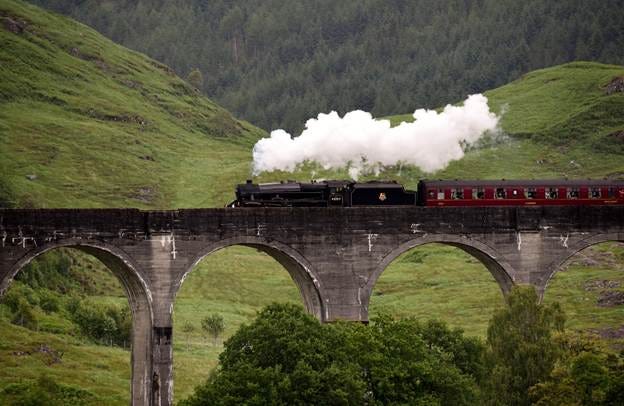
If you don’t want to drive, it’s surprisingly easy to get there from the southern part of England because, amazingly, there’s a direct overnight train from Euston station in London which delivers you to a station less than 2 miles away. This means you can have dinner in London, be sleeping as it crosses England and then Scotland, be woken up as the train is split into smaller components for different destinations in Edinburgh, and then have breakfast while rattling across Rannoch Moor, where the railway line crosses over boggy land untouched by any roads (Corrour station is a full 10 miles from the nearest road, so don’t get off the train there planning to take a taxi anywhere). The line is a testament to the determination of Victorian railway builders. Or, probably more accurately, a testament to the navvies who would have worked hard in very difficult conditions to achieve what their overlords wanted, since heavy railway track beds, lines and equipment, and bogs, aren’t ideal bedfellows.
No matter how you’ve made your journey, eventually you will get to within a stone’s throw of your destination. At the point where the River Roy meets the River Spean there’s a village. In the centre, on one side of the road there’s a small glass-fronted building that was, at one point, a butcher’s shop and which has now been empty for decades. On the other there’s another building that was, for a long time, the village shop and which is now a café. Next to that, there’s a more substantial building, the Memorial Hall, which at one point also held the Post Office before it moved into the village shop.
Opposite that, next to the bottle bank, there’s a charging point for electric cars. It’s very conveniently placed, and often used by people who frequent the area for walking, kayaking, and whatever else people get up to in the Highlands. If you stand here, with the main road behind you and the surprisingly large Roman Catholic Church to your left, ahead of you is a smaller single track road.
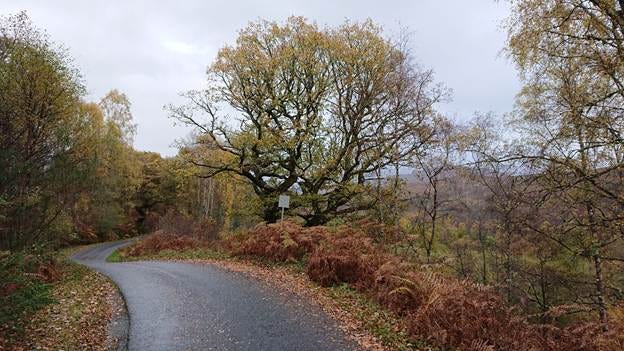
Only about a mile and a half to go, and the kettle’s on, so let’s head off up the road, which begins with a few steps up a reasonably steep gradient, with the church still on your left and an impressively large house, which has seen better days, Blarachà, on your right. After the first few steps and that slope, the road undulates gently up and down for the best part of a mile until, just after the gate to Coille Diobhain, there is a steep slope down to the bridge that crosses over Allt Ionndrainn.
If you’re in a larger vehicle here, note that the parapet has been hit regularly over the years (if you’re on foot and you lean over the current parapet, you can see the remains of its ancestors still sitting, or rather lying, shattered in the river below). While at times the water flowing under the bridge is not much more than a trickle, after heavy rainfall it turns quickly into the very definition of a raging torrent.
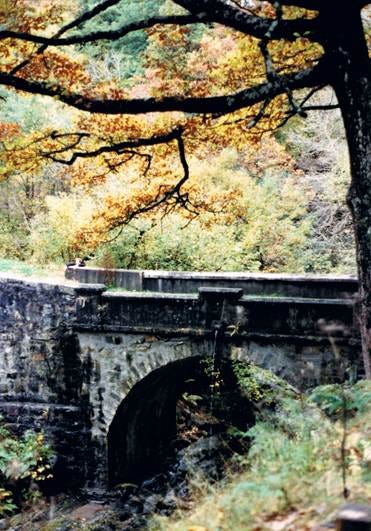
After pausing to admire the water (and the broken bridge parts), it’s time to walk up another gradient, shaded by trees, until you burst back out into the light at the top. Here, as the road bends round to the right, on the hill above you to your left there are houses. A couple of new ones, a couple of older ones, and many ruins.
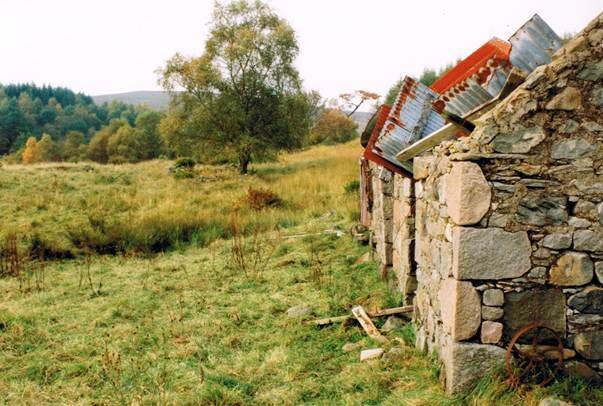
The ruins are silent witness to a time, long before, when this hill was a thriving community. A community that now only exists in the whispers carried on the wind, or the mute memories of stones lying seemingly in piles, but which were once houses. Homes. By each one, near where the entrance door would have been, there are rowan trees, still protecting the former dwellings from witches and evil spirits, orange berries bringing colour to the landscape.
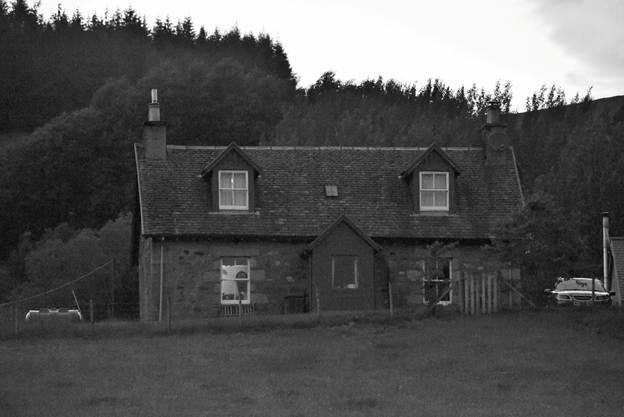
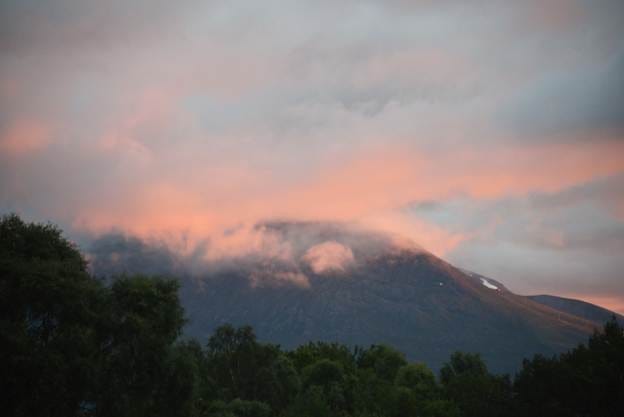
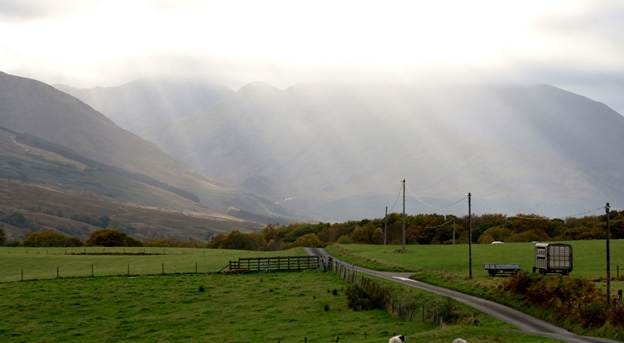
Near the ruins is an old house, sitting, as it has done for over a hundred years, looking across the field and back down to the road, then beyond that down to the bottom of the glen where the river flows, and across to Bohenie on the other side. Looking round slightly more towards the west, it can see for miles, as far as Aonach Mòr, dominating the skyline on the southern side of Glen Spean, a little light twinkling at night, in the distance, from the Snowgoose Terminal halfway up the mountain, which people can reach by gondola.
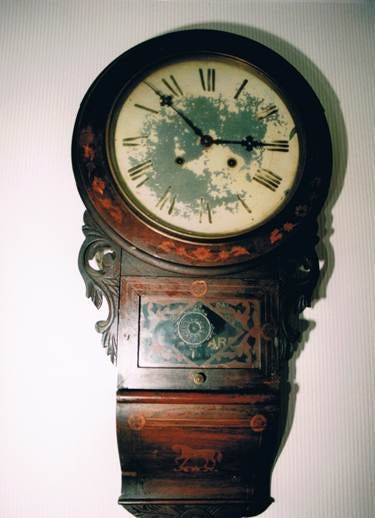
The old house was built with stone given by the Forestry Commission to an employee in grateful recognition for their service during a futile imperial war a long time ago in a faraway place. In the kitchen, an old Jackson electric stove still stands where it was installed many decades ago, opposite a slightly younger, but much more temperamental oil-fired Rayburn next to the dresser. The clock ticks, much as it has done since it was first hung on a nail on the wall not long after the house was built. Or does it, perhaps the tick only exists in imagination now, replaced by the less soothing sound of a quartz clock with no character, and no chimes. I can still hear it though, ticking away in my head, six hundred miles away.
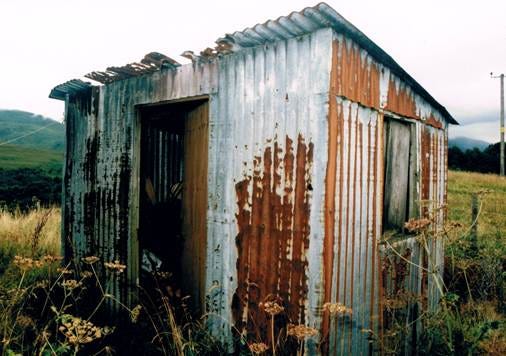
Outside, in the corrugated iron shed leaning against the back of the house, there’s a tin bath, a souvenir of a time when the house didn’t have any running water, or a bathroom. That room, with an enormous metal bath children can literally swim in, now sits between the kitchen and the living room.
At the top of the stairs is an old wooden butter churn. It’s dusty now, but at one point all the butter consumed in the house would have been made in it; the wooden handle being cranked round and round and round, until the golden yellow butter was ready. In the cupboard opposite, leaning in a corner, is, or rather was, a print of a painting of Saint Jérôme, the patron saint of translators. Why is it there, nobody can tell.
The house has seen people come, and seen people go, although it hasn’t had many owners. For much of its time, it belonged to the man who built it and his wife. After they had both died, it passed to his brother-in-law, and then, after a bit of toing and froing to his niece. The land on which it sits has been decrofted, although the wider area is still croft land. It’s a house of memories, memories on the walls, memories in people’s minds, and memories in the air.
And so it sits there, unmoving and watching. A house that’s a long way away and yet always present. A house that’s unremarkable in so many ways, looking, as it does, like so many others in that part of the world, and yet remarkable because of the fact that the memories it holds are distinct, unique to it and to nowhere else on the planet.
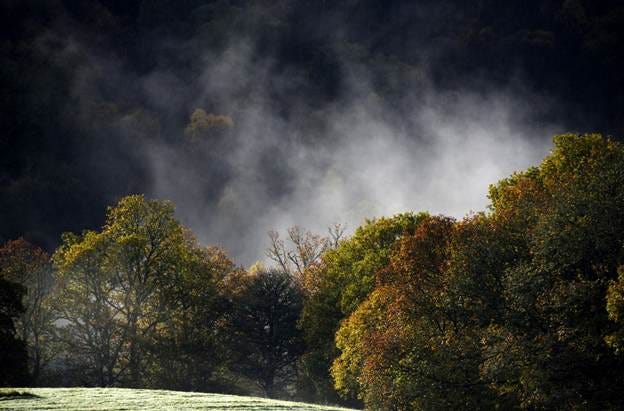
Maybe the mist is made up of memories
Here’s to memories, old ones and new ones too!
If, quite understandably, the thought of subscribing is too much to contemplate, but you’ve enjoyed reading something I’ve written, then you also have the option to simply buy me a train ticket (contributions may in fact be used to buy a coach ticket and pocket the difference, but I won’t tell if you don’t ask).
I am one of your silent readers. Mostly, because your writing takes me to some weird and wonderful, familiar and not places and, once I am there, I want to stay there for a little while longer. But staying there for a little while longer can only be achieved by avoiding the urge to articulate something. And so I remain the silent reader because I find myself outside of my physical location and in the land far far away, by distance or by time, and not wanting to come back just yet.
As happened with this piece, too. But I promised myself to keep the page open until I naturally land back in my physical location, slowly, so that I can tell you 'thank you for the experience.'
I could feel the trip, through your writing, and thoroughly enjoyed the journey … destination: this house for you, and the “house” that lives in the mists of our memories … May we remember to visit often, and thanks Paul for bringing us along.
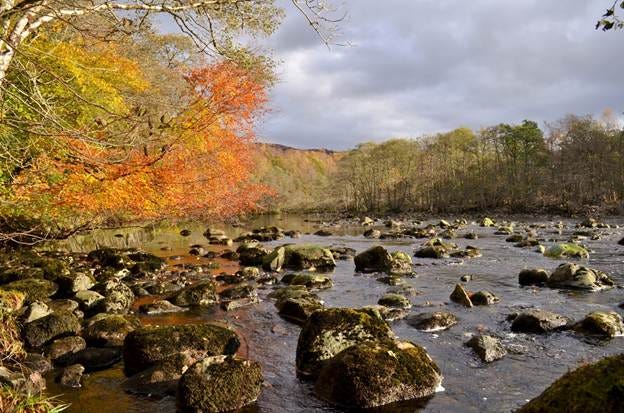
Love the photos … across the river, I want to rest on one of those stones and cool my feet in that river, along the road, I want to walk that stretch, and especially in homes no more, the 3 stones stacked on top of each other next to the bigger stone … love looking at the patterns created in stone in houses or stone walls, bridges, really anywhere that someone has stacked stone - truly works of art 🐝